
VLCD Meal Replacements: What They Are and How They Support Medical Weight Loss
Very-low-calorie diets are the most aggressive tool in medical weight loss. Here’s what they actually are, who they’re for, and how the products fit into a supervised program.
There is a version of weight loss that everybody understands and almost nobody chooses. You eat very little, for a defined period, and the weight comes off. That version is the very-low-calorie diet, and it is the single most effective intervention in obesity medicine, and also the one that requires the most medical oversight.
Here is what VLCD actually means, who it’s appropriate for, and why the meal replacement products we carry are designed the way they are.
What a Very-Low-Calorie Diet Actually Is
A VLCD is a physician-supervised program where daily intake falls to roughly 800 calories, under a fifth of what most adults eat. That number sounds severe because it is severe. It is not a diet you improvise. It is a clinical protocol with defined entry criteria, a defined duration, and defined monitoring.
Compare that to the calorie-restricted diets most people attempt on their own, which typically land somewhere between 1,200 and 1,800 calories. The gap sounds minor. Physiologically, it is not. At 800 calories, the body has very little room to draw on anything other than stored fat for fuel. That is the mechanism behind the rapid early weight loss, and it is also why the program requires supervision, the margin for error is genuinely narrow.
The CDC’s guidance on weight loss describes the same principle in less dramatic terms: sustained, moderate deficit beats aggressive short-term loss in almost every outcome that matters. VLCD exists in a clinical niche where the opposite is temporarily true, and it is supervised precisely because that is true.
Who VLCD Is Actually For
VLCD is not the first tool I reach for. It is not the right tool for a lot of people, and if you are reading this wondering whether you should do it, the honest answer is: probably not yet.
It makes sense when several of these are true:
- Your BMI is in a range where the health risks of obesity are already clinically significant
- You have tried structured calorie restriction before and either did not lose meaningful weight or could not sustain it
- You have a medical condition that benefits from rapid weight reduction, for example, type 2 diabetes, or sleep apnea that responds quickly to weight loss
- You can commit to close medical follow-up, including regular lab work
- You have a genuine understanding that this is a supervised clinical episode, not a lifestyle
It makes very little sense if you are not in medical supervision, if you have a history of disordered eating, if you are pregnant or breastfeeding, if you have uncontrolled diabetes with hypoglycemia risk, or if what you actually want is a diet you can live with for the next five years.
And it is worth saying plainly: for most people, a sustainable moderate deficit gets you most of the way to the same place without the medical risk, the monitoring burden, or the rebound. VLCD is the accelerator, not the destination.
How the Meal Replacement Products Fit
Here is where it becomes concrete. During the active phase of a VLCD program, you are typically consuming 3 to 4 full meal replacements per day, plus a small amount of additional food, a piece of fruit, some vegetables, or a specific item your program includes for variety and to help maintain the small calorie floor.
The meal replacement has to carry the nutritional weight of an entire meal, because it is the meal. That drives every design decision:
Protein becomes non-negotiable
At 800 calories per day, the risk is not simply hunger, it is losing metabolically valuable tissue along with fat. Protein is what protects lean mass in a severe deficit. This is why the full meal replacement products in this category carry substantially more protein than a typical protein powder or snack bar.
The products we carry run in the range of 20 to 27 grams of protein per serving, with roughly 160 to 200 calories each. For reference, the NIDDK’s guidance on weight management emphasizes that adequate protein intake during weight loss protects muscle mass, the principle that drives the formulation of every VLCD product on the market.
Complete micronutrient coverage
When you are eating 800 calories a day, the food you do eat has to be unusually dense in nutrients. Full meal replacements are formulated to be nutritionally complete, vitamins, minerals, essential fatty acids, fiber, because the protocol assumes you are eating almost nothing else for weeks at a time.
Variety is a clinical feature, not a marketing one
This is the part people miss. A program where you drink the same shake five times a day for three weeks will fail on adherence long before it fails on physiology. The savory soup options exist for a clinical reason: they break up the monotony that drives people off VLCD programs early.
The full meal replacement line we carry spans puddings, shakes, and soups for exactly this reason, sweet options for some meals, savory soups for others, and enough variety that a twelve-week program is survivable rather than punishing.
The Real Risk Nobody Mentions
VLCD works. That is not in dispute. The risk is what happens around it.
Weight loss achieved this rapidly is mostly lean tissue and water initially, and the metabolic adaptations that come with severe restriction make maintenance genuinely hard. Studies on very-low-calorie programs consistently find that a substantial proportion of participants regain much of the weight once they return to their previous eating patterns, not because they lack discipline, but because they were never taught how to eat at maintenance level after the protocol ended.
This is why the best VLCD programs treat the VLCD phase as the middle of a longer arc: intensive restriction, structured reintroduction, then ongoing maintenance support. If you are being offered a VLCD program with no follow-on plan, that is a bad program.
How to Know If You Qualify
The honest answer is that this is a conversation, not a self-assessment. If you are curious whether a very-low-calorie program makes sense for you, here is what a responsible evaluation looks like:
- A medical history review, including any history of eating disorders
- Baseline blood work, metabolic markers, liver and kidney function, glucose and insulin
- An honest look at your weight history and what you have tried before
- A plan for what happens after the intensive phase
If you go in knowing that the intensive phase is temporary, that you will be monitored, and that the follow-on plan matters as much as the restriction itself, then VLCD can be an appropriate tool. If you are looking for a fast fix you can start on Monday, it is the wrong tool, and any program that offers it without medical evaluation is not a medical program.
Your Options at Clinical Nutrition Center
We carry the full meal replacement line that medical weight loss programs are built on, puddings, shakes, and soups, in the flavors that make a structured program livable. Whether that program should be a very-low-calorie one, a more moderate structured plan, or simply better food choices depends on your history, and that is a conversation we should have before you buy anything.
Recommended Products
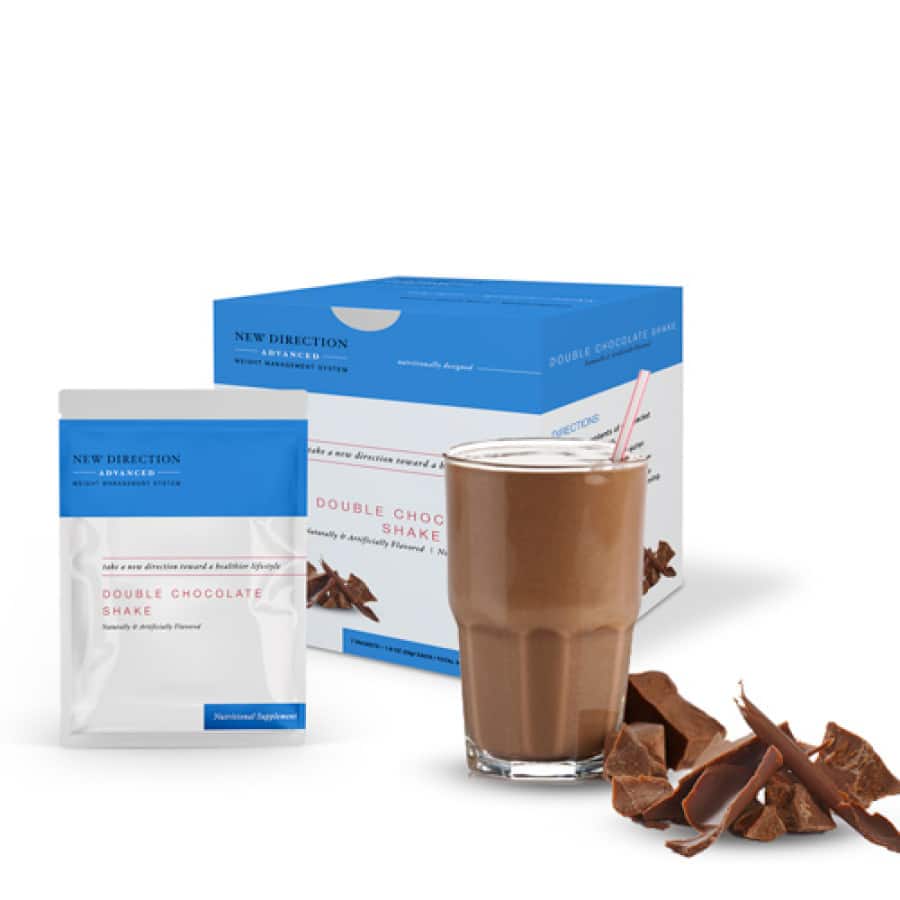
- New Direction Advanced Double Chocolate Shake27g protein, 200 calories, nutritionally complete full meal replacement. $27.50 / box.
- Numetra Chocolate Pudding and Shake20g protein, 160 calories, 7 servings per box. $22.50.
- Numetra Creamy Chicken SoupSavory option that makes a structured program sustainable. $22.50.
- Browse All Meal ReplacementsThe complete Numetra and New Direction line.
—
Have questions about which structured program is right for you? Contact us or browse our full product selection.
